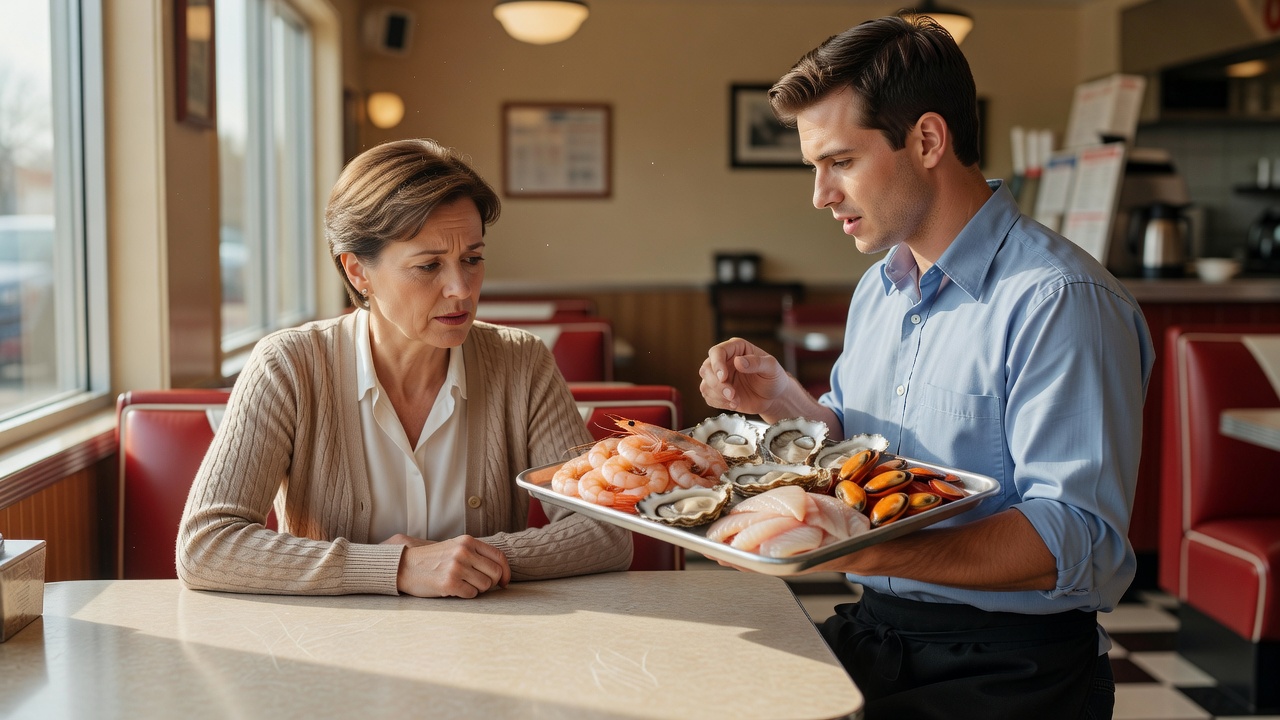
A tasting meal can be an invitation to surrender a little control: several courses, unfamiliar ingredients and a sequence designed by someone else. That is enjoyable only when essential needs are understood. Before you become absorbed in the promise of a beautifully presented plate, establish the practical conditions that allow you to relax. Allergies, accessibility and raw-food concerns belong in that first conversation.
Start with the venue's own current information. Independent editorial features can explain concepts, but they cannot confirm a particular evening's ingredients, substitutions or availability. A photograph might show a dish that is no longer served. A review may describe a different season. Treat such material as inspiration and direct your operational questions to the people responsible for the visit.
Be precise about allergies
Fish, crustaceans and molluscs are separate categories within the UK's regulated allergen framework. A person who can eat one category should not infer that another is safe for them. State the specific allergy and explain any relevant professional advice you have received. Avoid reducing the conversation to “I do not eat seafood” if the issue is a potentially serious allergic reaction.
Ask about stocks, sauces, garnishes and shared equipment as well as the obvious main ingredient. Fish sauce, a shellfish reduction or a seafood-based seasoning may not be visible. Cross-contact can occur during storage, preparation or service. Removing an ingredient from the finished plate may not address the risk. The kitchen needs to explain its procedures and limitations, not merely agree to omit a garnish.
Tell the venue before booking where possible, then confirm the information again when you arrive. If the answer is uncertain, ask for clarification before eating. Do not use a small taste as a safety test. Follow your clinician's advice and emergency plan. If a severe allergic reaction is suspected, seek emergency medical help immediately; this journal is not a source of individual medical advice.
Treat raw preparations as a distinct question
Raw or lightly cooked seafood can carry microbiological or parasite risks. Appearance, smell and an attractive provenance description cannot establish safety. Freezing may address certain parasite hazards when the applicable controls are met, but it does not remove every possible risk. Lemon juice, curing and marinating are not general substitutes for validated safety procedures.
Pregnant people, older adults, young children and people with weakened immune systems may need to avoid particular raw or undercooked foods. Advice varies by product and circumstance, so consult current guidance from the NHS or Food Standards Agency and seek individual clinical advice where needed. Ask the restaurant whether a fully cooked alternative is possible rather than assuming every tasting sequence can be adapted.
Make the format work for you
Ask how the meal is structured, whether dishes are shared and whether the whole table must follow the same format. Confirm current pricing, payment conditions, cancellation terms and any deposit directly with the venue. We do not publish invented menus or imply availability. A clear answer before booking is more useful than an assumption based on the language of “premium” or “tasting”.
Timing deserves similar attention. If you have a fixed departure, explain it before committing to a long format. If you prefer an unhurried meal, ask about table-return requirements. Service rhythms vary, and a team may not be able to compress a carefully sequenced experience without changing it. The purpose of asking is to discover compatibility, not to demand an exception.
Include access and sensory comfort
Describe practical requirements specifically: step-free entry, an appropriate toilet, a supportive chair, room for a mobility aid or a quieter location. A short “accessible” label is not enough to establish all these details. Ask about the route through the building and the type of seating. If spoken explanations are difficult to follow, request written ingredient information where available.
Photography and phone use are also worth approaching considerately. A quick picture without flash may be unobtrusive, but venue policies and neighbouring diners' comfort still matter. Ask before photographing staff closely or including other guests. More importantly, do not let documentation delay eating a temperature-sensitive dish or interrupt an explanation you need to hear.
Leave with useful observations
After the visit, distinguish what you experienced from what you inferred. You can describe a sauce's texture, a room's noise or the clarity of an answer. You cannot establish a fishery's condition from taste alone. Fair notes preserve that boundary. They also make it easier to remember which questions improved the meal and which you would ask next time.
The considered diner is not the person who knows every technical term. It is the person who can state a need, recognise uncertainty and remain curious. That approach gives the kitchen a fair chance to communicate—and gives you a better foundation for enjoying the plate.