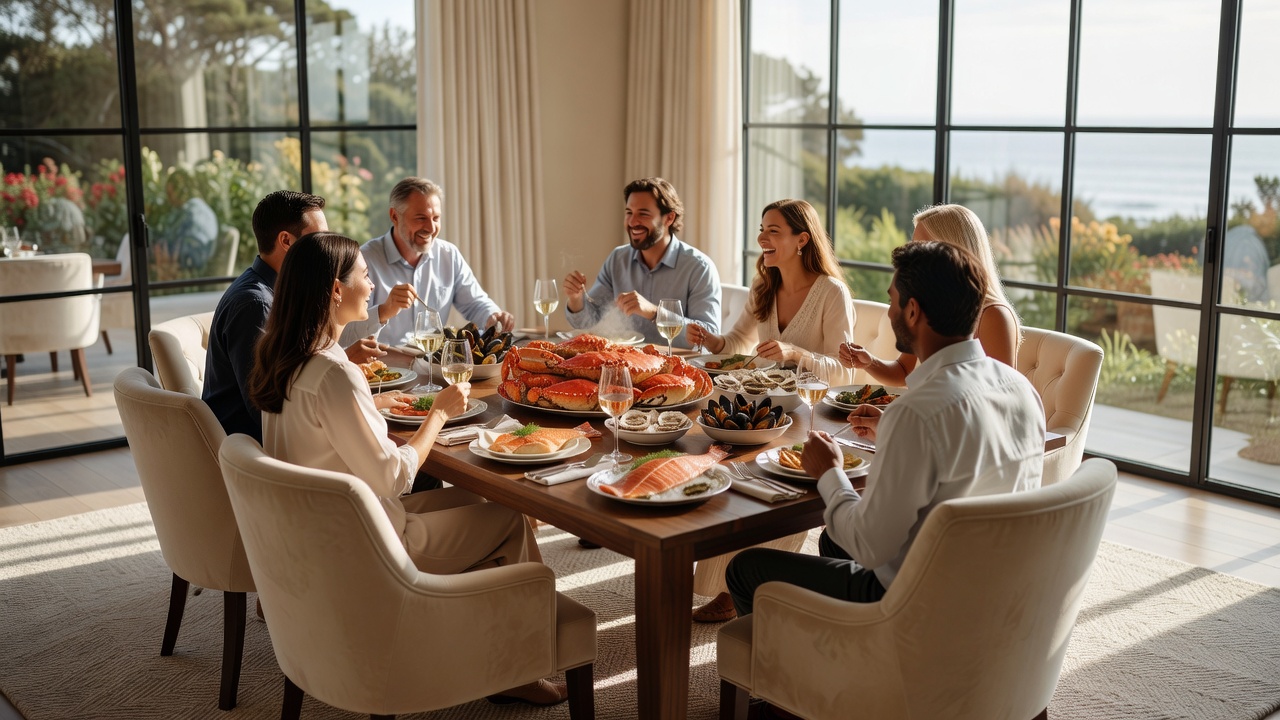
A seafood gallery need not have white walls or a view of the water. Here, the phrase describes a way of paying attention: the plate is presented with enough context and space for its details to register. A converted warehouse, a small neighbourhood room and a coastal dining terrace can all support that experience. Their success depends less on a recognisable style than on how they accommodate the people eating there.
Think of the room as a frame with practical responsibilities. It must let guests see, hear, sit, move and ask questions. Expensive materials do not guarantee any of these things. A beautiful stone floor can amplify noise; a dramatic chair can become uncomfortable halfway through a long meal. Premium dining is more convincing when design choices remain useful after the initial impression.
Follow the daylight
Natural light can reveal the sheen of a sauce and the translucency of a fine slice. It also changes during a meal. A seat that is softly lit on arrival may catch direct glare later, while a window behind a companion can make their face difficult to read. Good lighting supports both the plate and the person across the table. Neither should need to compete with a theatrical spotlight.
Artificial light has its own role. Warm illumination can create intimacy, but very dim conditions make menus and subtle ingredients harder to distinguish. Strongly coloured lighting can alter the apparent colour of food. If seeing the plate clearly matters to you, ask about the dining area and the timing of daylight rather than relying on promotional photographs taken under different conditions.
Hear the shape of the room
Acoustics are easy to overlook in an empty interior photograph. Glass, stone and bare walls can produce a lively room that becomes tiring when full. Upholstery, curtains and acoustic treatments may soften that effect without making the space silent. The useful question is not whether a room is quiet in the abstract, but whether you can comfortably follow a conversation and hear an explanation of the food.
An open kitchen adds another layer. The sound of service can feel engaging, particularly when you enjoy watching the final stages of preparation. It can also interrupt conversation or make spoken ingredient information difficult to catch. Counter seating brings you closer to the work, but it is not inherently a better seat. Your preferences, hearing needs and desired level of interaction should guide the choice.
Place can enrich a meal without proving its origin
At a harbour such as Newlyn, the presence of working boats gives seafood a vivid geographical setting. Around Copenhagen's harbour, water and urban architecture create a different kind of coastal context. In San Sebastián, the relationship between markets, bars and formal dining is another way a city frames seafood. These places help explain culinary culture; none automatically verifies the source of an individual dish.
Public institutions offer useful ways to develop this distinction. London's Design Museum encourages attention to how objects and environments work. The V&A Dundee connects design with a waterfront setting. Looking at such spaces can sharpen questions about material, movement and interpretation without turning a restaurant into a museum. The comparison is a lens, not a claim that dining and exhibition design have identical aims.
The most important details may be practical
Ask about step-free entry, accessible toilets, chair height and space around tables when those details affect your visit. “Accessible” can conceal several different arrangements, so explain the features you need and request specific answers. Counter stools, narrow routes and heavy doors may matter more than the overall size of the room. Photographs rarely show the complete journey from street to seat.
Service pacing is also spatial. A trolley beside the table, a tableside explanation or a shared platter changes how much room guests need. Personal belongings, mobility aids and coats should not become obstacles. If you prefer a less exposed seat or need a quieter location, ask in advance; the venue can explain what is possible, rather than leaving both sides to improvise on arrival.
Choose the setting for your kind of attention
A celebratory group may enjoy energy and shared spectacle. Two people interested in a detailed provenance conversation may prefer a quieter table. A solo diner may welcome the activity of a counter—or want the privacy of a conventional seat. There is no universal hierarchy of good dining positions. A room succeeds when it supports the experience you actually want.
Look beyond the most photogenic angle. Notice whether the space allows the plate to be seen, the story to be heard and the guest to feel at ease. The most thoughtful setting does not insist on being the centre of attention. It gives the meal room to become memorable on its own terms.